
Menu
Building a Concrete Retaining Wall for Local Drainage
Concrete Retaining Wall Grand Prairie
The construction of a concrete retaining wall is used as part of a drainage system within the city limits of Grand Prairie and is typically an interdisciplinary process involving structural engineers, regulatory authorities (local government), and environmental concerns. Retaining walls have two primary functions: they provide soil retention, and, through their design, manage storm water flow (runoff). As such, the retaining wall must be designed to withstand the movement of expansive clay soils that are typical in Grand Prairie and will also require consideration of the weather variables in this area. At Grand Prairie Concrete Pros., we can use our knowledge of local conditions combined with state-of-the-art engineering methods to develop retaining wall systems that provide both structural stability and drainage performance for your property for years to come. Our company’s broad-based approach to the installation of each retaining wall provides for compliance with all applicable ordinances, as well as superior drainage management.
Understanding Drainage Focused Retaining Wall Design
A drainage-focused retaining wall is a concrete retaining wall that is specifically designed to handle drainage and, therefore, will have to take into account the structural load requirements and the water management aspects of the structure. A drainage-focused retaining wall has to capture surface runoff, guide groundwater flow, and stabilize the soil against erosion. At the same time, it must also remain structurally stable when subjected to different moisture levels. Therefore, designing a drainage-focused retaining wall requires a detailed analysis of the soil’s condition, the flow pattern of water, and the long-term expected performance of the wall.
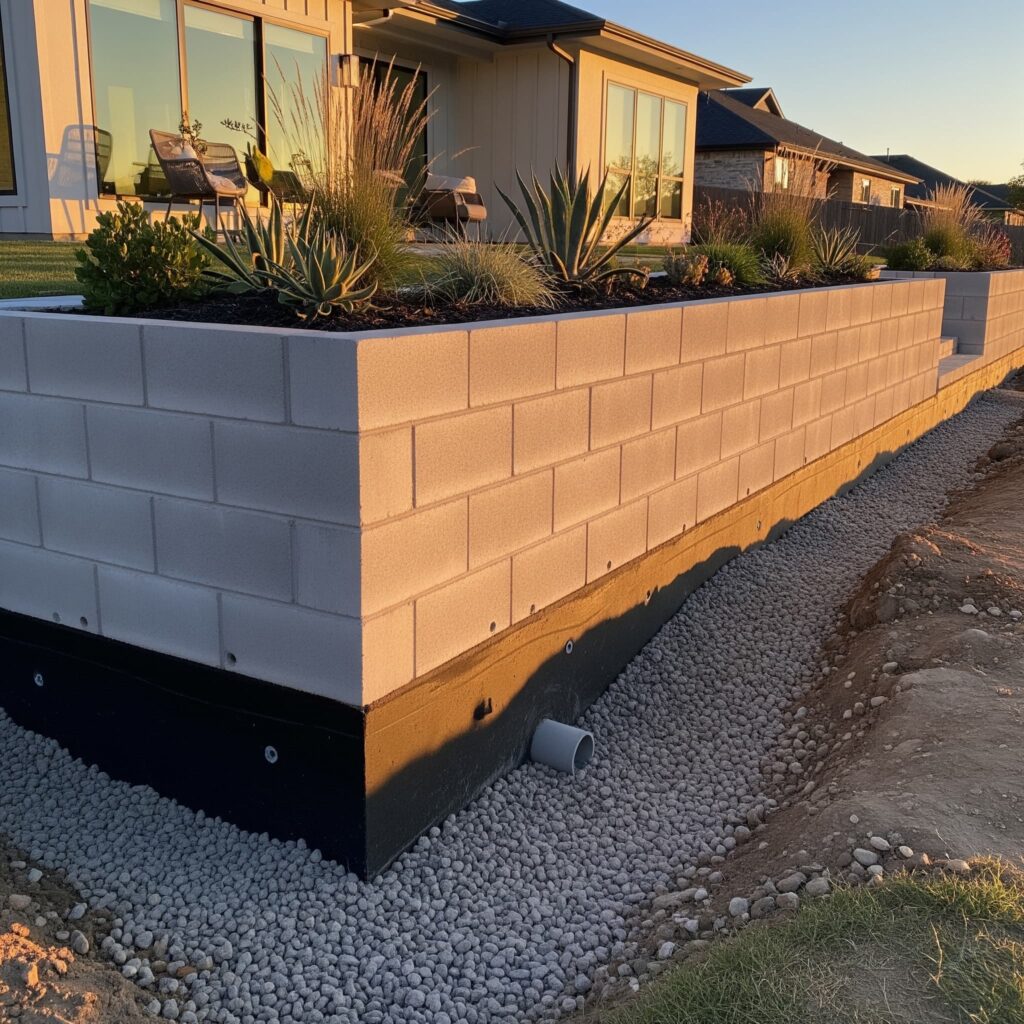
Unlike decorative or purely structural retaining walls, drainage-focused systems use specialized features such as weep holes, French drains, waterproof membranes, and specific backfill materials to work together to prevent the buildup of hydrostatic pressure that would cause the wall to become unstable or create a flooding issue.
Structural Requirements
All retaining walls greater than 4 feet tall in Grand Prairie must be designed using engineered plans and sealed by a licensed professional engineer. The design of the wall must account for the lateral earth pressure, the surcharge load, and the hydrostatic forces that occur as a result of extreme rain events. Furthermore, the wall must have sufficient factors of safety against sliding, overturning, and bearing capacity failure. Designing the foundation of a retaining wall is also a crucial aspect of design in Grand Prairie’s expansive clay soils. Therefore, in many cases, a deeper footing and additional reinforcing is required to accommodate the seasonal movement of the soil. Also, the addition of drainage elements to the design must not negatively affect the structural integrity of the wall and must ultimately ensure the long-term stability of the wall.
Grand Prairie Regulatory Requirements
The City of Grand Prairie establishes specific requirements regarding the construction of retaining walls, especially if they impede the normal functioning of the local drainage systems. In accordance with the City’s Drainage Design Manual, retaining walls cannot be constructed in drainage easements, stormwater management areas, floodplains, floodways, or rights-of-way. However, retaining walls can be constructed on private property, including the footings of the wall. Building permits are required for the construction of all retaining walls, regardless of their height. Retaining walls taller than four feet must have plans signed and sealed by a registered professional engineer who is licensed in Texas. However, although building permits are not always required for walls shorter than four feet in height, the City of Grand Prairie staff may request the submission of engineering documents related to the design of such walls. Ultimately, this assures that there will be an integration of the local drainage systems with the retaining wall and that the wall will comply with the safety standards of the City.
Drainage Design Compliance
The development of a retaining wall project must meet all of the requirements outlined in the City of Grand Prairie’s overall drainage policies. The policies of the City place a priority on flood mitigation and stormwater management. The City’s MS4 Stormwater Management Program requires that the developer consider the negative impacts of stormwater management modifications on water quality and downstream effects. Depending on the size of the project and its potential to impact natural drainage channels or wetland areas, environmental reviews may be required. The coordination with the Engineering Department of the City is necessary to aensurethat the drainage systems incorporated into the design of the retaining wall integrate with the existing drainage systems of the City.
Site Assessment and Soil Conditions
The first step to successful retaining wall construction is a complete site evaluation that addresses both the geotechnical conditions (soil) and hydrologic conditions (water) at the site. The location of Grand Prairie, in the Blackland Prairie region, creates some unique challenges because of the expansive clay soils present at the site, with high shrink-swelling potential. Both the structural design of the retaining wall and the performance of the drainage systems of the retaining wall will be affected by the geotechnical conditions of the site. The results of a geotechnical investigation determine the soil’s bearing capacity, the soil’s expansion characteristics, and the seasonal variations of moisture content in the soil. The data obtained from the geotechnical investigation guides the design of the foundations of the retaining wall, the specification of the backfill materials, and the layout of the drainage systems. The determination of the flow patterns of groundwater assists in optimizing the placement of the drainage systems of the retaining wall and in preventing unexpected accumulation of water.
Drainage Pattern Analysis
An extensive site evaluation is performed to identify existing drainage patterns, upstream contributing areas, and downstream discharge points. The evaluation of the drainage patterns of the site ensures that the retaining wall systems are compatible with both natural and constructed drainage features and do not adversely affect the surrounding properties. Due to the proximity of the area to the Lone Star Park and State Highway 360 corridors, any drainage-focused retaining wall must be designed to accommodate increased runoff from developed areas and to provide sufficient capacity to manage peak flow events during the frequent intense rainfall events that occur in North Texas. The evaluation of the drainage patterns of the site will help prevent drainage-focused retaining walls from being overwhelmed by excessive water flow during severe rainfall events.
Construction Methods and Materials
Advanced materials and methods are used to construct modern concrete retaining walls that are specifically suited for drainage purposes. High-strength concrete with suitable admixtures provides resistance to freeze/thaw cycles and chemical attack from groundwater. Reinforcement design takes into account both the structural loads on the retaining wall and thermal stresses that develop in the Texas climate. Waterproofing systems protect the wall structure and allow controlled water passage through the designated drainage features of the wall. Typically, these systems consist of a waterproofing membrane, a drainage composite, and protective layers that will provide years of service.
Drainage Integration Features
Weep holes are drilled into the retaining wall at regular intervals to relieve hydrostatic pressures while keeping the soil from migrating through the openings. French drain systems placed behind the retaining wall collect and redirect groundwater away from the retaining wall, thereby reducing the load on the retaining wall. Filter fabrics are installed correctly to prevent fine soil particles from accumulating in the drainage systems over time. The selection of the backfill material becomes critical to maintaining the stability of the soil while allowing water to move through the soil. Compacting the backfill is essential to providing adequate support to the retaining wall without creating impermeable zones that would potentially trap water.
Specialized Drainage Applications
In addition to performing basic drainage functions to retain the soil, retaining walls are used for a variety of other drainage functions, including channel lining, slope stabilization, and the construction of stormwater management facilities. Each type of application will require specialized design considerations and construction techniques to meet the unique performance requirements of each application. Channel retaining walls protect the soil against erosion while maintaining hydraulic efficiency for storm flows. The walls must be able to withstand high-velocity flows and debris impacts, while providing long-term protection to the adjacent properties. Ensuring the design of the walls integrates with upstream and downstream facilities will facilitate the transition of storm flows.
Stormwater Management Integration
Many modern retaining wall designs incorporate stormwater management features such as infiltration zones, bioretention areas, and water quality treatment systems. These “green” infrastructure features provide environmental benefits while continuing to provide primary structural and drainage functions. Incorporating these types of features into the design of retaining walls is consistent with the City of Grand Prairie’s commitment to practicing sustainable stormwater management principles and can provide economic advantages compared to constructing separate structural and environmental systems.
Long-Term Performance and Maintenance
When properly constructed and installed, well-designed concrete retaining walls require little to no maintenance. However, the drainage components of the retaining wall require periodic maintenance to continue to perform as intended. Cleaning the weep holes of the retaining wall regularly will help to prevent the weep holes from becoming blocked, and subsequently will prevent the buildup of hydrostatic pressure in the retaining wall. Inspecting the retaining wall on an annual basis to evaluate the structural condition of the wall, the functionality of the drainage components, and any signs of settling or movement will enable minor issues to be addressed before they escalate into major repair or replacement issues.
Performance Monitoring
Performance monitoring systems can provide early indications of changes in performance, especially important for large or critical projects. Observational protocols to monitor water management performance and structural stability can be implemented on a simple basis to evaluate performance over multiple seasons. Documenting the historical performance of a project will aid in the planning and implementation of future maintenance activities and provide valuable information for evaluating the suitability of future projects that share similar conditions and requirements.
Benefits of Professional Design and Construction
Professional retaining wall design and construction will assure the optimal integration of structural requirements, drainage performance, and compliance with applicable regulations. We have a thorough understanding of the local geotechnical conditions, climatic conditions, and regulatory requirements that impact the success of projects. Quality control of construction will prevent costly errors and ensure the long-term performance of the retaining wall. Professional construction services include preparing the foundation, placing the reinforcement, integrating the drainage systems, and conducting all necessary tests to confirm compliance with the design requirements. With Grand Prairie Concrete Pros, you can depend on expertly engineered retaining wall solutions that will effectively manage drainage while meeting all applicable City regulations. Our approach to retaining wall construction will provide the protection of your investment and the environmental stewardship of our community. Contact us today to discuss your specific drainage needs and learn how professionally constructed retaining walls can solve your property’s water management issues.
LATEST POSTS