
Menu
When to Use Rebar vs. Wire Mesh in Concrete Slab Construction
Concrete Slab Grand Prairie
The process of selecting an appropriate reinforcement system for concrete slab construction is heavily dependent on the unique characteristics and limitations of each of the two primary systems: rebar and wire mesh. Each reinforcement system provides a different function in the overall process of concrete construction; rebar is used as the principal means of resisting tensile loads in high-loaded applications, while wire mesh is generally less expensive than rebar and therefore is often used in light-loaded applications where it can be used to provide control over cracking. A variety of project-specific factors are also important when determining which reinforcement system will best meet the needs of the project; these include expected loading conditions, thickness of the slab, environmental conditions (such as exposure to moisture), and budgetary constraints. In addition to these general factors, Grand Prairie’s clay soils and extreme temperature fluctuations add to the complexity of reinforcement selection and placement strategies. Contractors who have experience working in Grand Prairie will consider these factors collectively to provide recommendations regarding the most suitable reinforcement systems to meet the long-term performance and structural integrity of the project.
Understanding Concrete Reinforcement Fundamentals
Why Concrete Requires Reinforcement
Concrete has great compressive strength; however, it has inadequate tensile strength to resist flexural (bending) forces, thermal expansion stresses, and shrinkage stresses. If there is no reinforcement provided in the concrete slabs, under normal conditions, cracks will occur in the slabs, causing structural weakness and aesthetic issues that reduce the performance and longevity of the slabs.
Steel reinforcement provides the tensile strength that is missing in concrete, so that when the two materials work together in a composite manner, the resulting structure resists both compressive and tensile forces. Wire mesh and rebar are roughly equal in strength (yield strength of approximately 55,000 psi), but the physical attributes of the two materials are vastly different, as are their uses.
How Reinforcement Works
When steel and concrete expand and contract due to temperature changes, they expand and contract similarly; therefore, steel reinforcement works effectively as a reinforcing medium in concrete without developing internal stress concentrations. Steel reinforcement limits the size of the cracks developed by the shrinking of concrete as it cures or undergoes thermal cycles and prevents crack propagation through the remainder of the slab.
If steel reinforcement is placed in an optimum location in the concrete cross-section, then the most efficient use of steel will be realized. Both rebar and welded wire fabric can be used to place the steel in an optimum location if they are installed in the middle of the slab or slightly above mid-depth.
Characteristics and Applications of Rebar
Advantages of Structural Use of Rebar
The tensile strength and structural capacity of rebar far exceed those of wire mesh; therefore, rebar is essential for all heavy-load applications and structural concrete slabs. The deformation on the surface of rebar provides excellent mechanical bond with the surrounding concrete and facilitates efficient transfer of load into the concrete during a stress event.
The ability to individually place rebar allows for precision in designing reinforcement to meet specific loading patterns and structural requirements. The flexibility afforded by individual placement of rebar is especially beneficial for complex slab configurations or areas of the slab with high concentrations of loads, i.e., equipment pads or areas of high vehicle traffic.
Recommended Rebar Applications
Reinforcement of driveways using rebar is highly recommended, particularly at entrances to streets where trucks and delivery vehicles create concentrated loads. Parking lots, warehouse floors, and industrial slabs require rebar to meet structural design requirements. Slabs greater than 5 inches thick usually require rebar reinforcement to adequately control cracks and provide structural performance. Footings, stem walls, and structural slabs rely on rebar for the required strength and durability characteristics.
Properties and Uses of Wire Mesh
Crack Control for Residential Projects
Wire mesh is a cost-effective option for providing reinforcement for residential applications with moderate structural loads, with the need for crack control being the major concern. The uniform grid pattern of the welded mesh distributes reinforcement evenly across the slab, thus providing consistent crack resistance.
Wire mesh also offers fast and easy installation, which is attractive for large area applications where labor costs are a significant factor in the project budget. Installing sheets of wire mesh is generally faster than installing individual rebar, which means that the entire construction time will be shorter and thus, fewer dollars will be spent on the job.
Recommended Wire Mesh Applications
Patios, sidewalks, and light-duty driveways typically have foot traffic and/or light furniture loads that fall within the capabilities of wire mesh. When correctly selected and installed, wire mesh can provide satisfactory performance for these residential applications. Slabs between 3.5 and 4 inches thick are commonly reinforced with wire mesh for crack control and cost savings. Garage floors, basement slabs, and other residential applications have had successful installations of wire mesh for reinforcement.
Load Requirements and Application Criteria
Heavy Load Requirements
Traffic from vehicles creates dynamic loads that exceed the static calculations; therefore, the reinforcement systems must be able to withstand the multiple stress cycles created by the vehicle traffic. Rebar has the strength and fatigue resistance needed for driveways, parking areas, and commercial slabs that have heavy vehicle traffic.
Equipment foundations, machinery pads, and warehouse floors are examples of industrial applications that require rebar reinforcement to meet structural design requirements. These applications often specify the minimum amount of reinforcement required to meet the structural design requirements, and rebar is often the only material available that can meet the reinforcement ratio requirements within the practical limits of the slab thickness.
Light Duty Applications
Residential applications with low structural requirements allow the use of wire mesh for reinforcement while still achieving satisfactory performance and cost control. Stamped patios and walkways are examples of decorative concrete applications that typically use wire mesh for crack control without affecting the aesthetic appeal of the decorative patterns.
Decorative concrete applications are often limited to wire mesh because the uniform reinforcement distribution provided by the mesh eliminates localized cracking that may occur around decorative patterns.
Installation Requirements for Rebar and Wire Mesh
Requirements for Rebar Installation
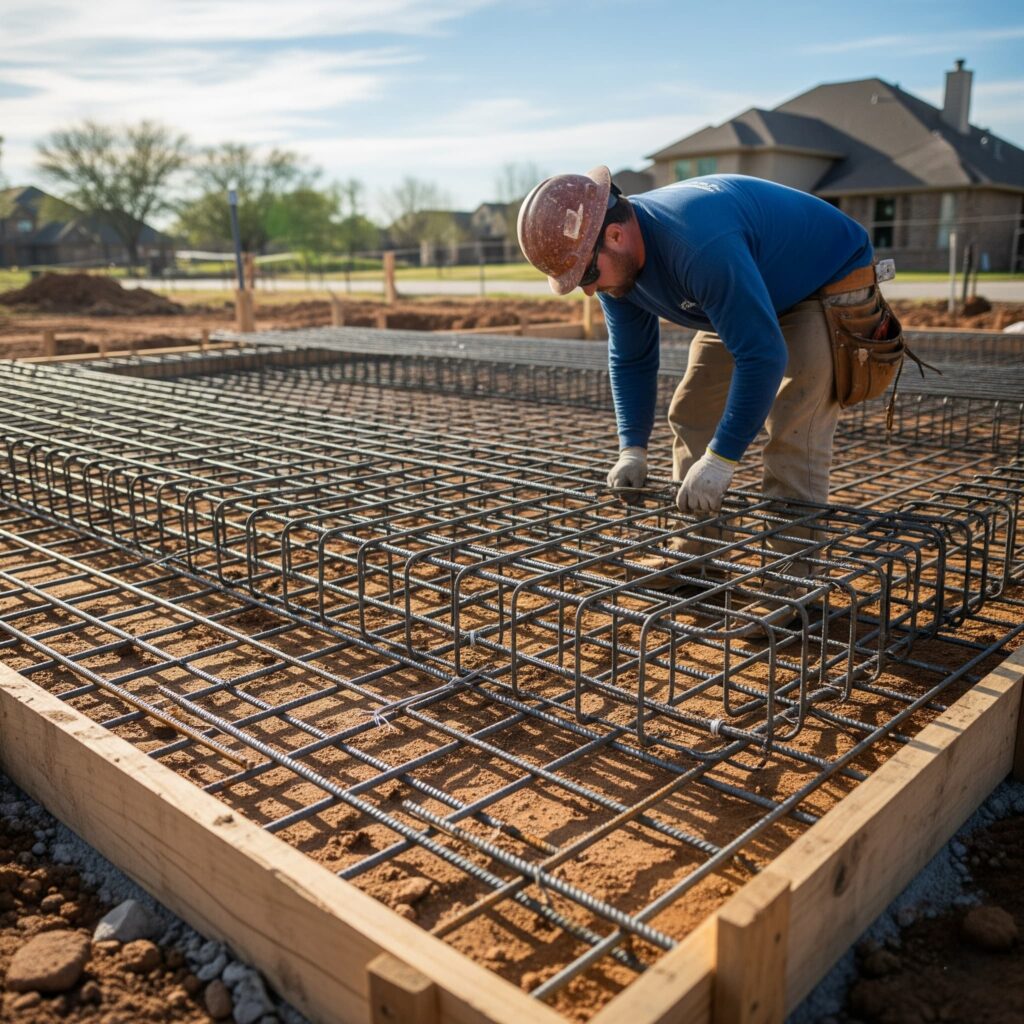
Rebar should only be installed by professionals who can ensure that the rebar is properly spaced, supported, and covered with sufficient concrete to provide optimal performance. The rebar chairs should be placed to maintain the rebar at the proper elevation throughout the concrete pour to avoid settlement of the rebar that would reduce the effectiveness of the reinforcement.
The splices of rebar should be made according to the overlap and tie requirements established for the application and are critical for structural applications where load transfer between reinforcement members can affect the overall performance of the system.
Practices for Wire Mesh Installation
Care must be taken to prevent the wire mesh from becoming displaced during the concrete placement and to maintain the proper position of the wire mesh in the slab cross-section. The lap joints between sheets of wire mesh should be sufficient to provide continuous reinforcement.
Installing wire mesh is easier than placing individual pieces of rebar; however, it does require proper support to prevent sagging under the weight of the concrete. Contractors use supports that are spaced to keep the mesh elevated during the placement process.
Environmental Factors and Local Climate
Considerations Due to Temperature Extremes
In Grand Prairie, the extreme temperature variations cause significant thermal stress in concrete slabs, thereby necessitating reinforcement that can accommodate expansion and contraction cycles. Rebar provides superior performance under these conditions due to its strength and dimensional stability.
Soil Movement Potential
Soil movement caused by expansive clay soils throughout much of North Texas adds additional stresses to the reinforcement. Professional contractors take into consideration the potential for soil movement when selecting the type and placement of the reinforcement for the application.
Requirements for Corrosion Protection
Properly covering the rebar and wire mesh with a minimum of the required amount of concrete provides adequate protection against corrosion. The required amount of concrete cover varies depending on the exposure conditions and the type of reinforcement used. Adequate cover is essential to eliminate rust-related problems that can compromise the structural integrity of the slab over time.
For aggressive exposure conditions, galvanizing or applying an epoxy coating to the reinforcement provides increased corrosion protection and extends the service life of the slab. These coatings are especially beneficial in areas with high moisture levels or chemical contamination.
Economic Comparisons
Material Cost Comparison
Wire mesh is generally less expensive than rebar for the material cost and installation. Therefore, wire mesh is an attractive option for budget-sensitive projects where the structural requirements are suitable for wire mesh. However, while wire mesh is generally less expensive than rebar, the cost differential is generally a very small percentage of the total cost of the project.
Cost of Performance Over Time
While rebar is more expensive than wire mesh up front, rebar provides better long-term value due to its higher strength and lower maintenance requirements. Many times, the initial cost difference is well worth the added value of using rebar in the long run.
Proper selection of reinforcement prevents costly repairs and early replacement and provides excellent return on investment for the life of the slab. Conversely, inadequate reinforcement causes cracking, settlement, and other structural problems that result in expensive repair or replacement.
Proper specification of reinforcement ensures that the reinforcement is optimized for the application and provides the best possible cost-benefit. This will help to eliminate unnecessary and excessive amounts of reinforcement and provide the desired level of performance for the intended use conditions.
Combining Rebar and Wire Mesh
Hybrid Reinforcement Systems
Some applications benefit from combining rebar and wire mesh to optimize both structural strength and crack control. Deformed rebar provides strength and reinforcement and can be used with stainless steel mesh grids to ensure proper placement and crack distribution. Heavy-duty driveways and commercial slabs often use both reinforcement types to meet structural requirements and provide comprehensive crack control.
Placement of Reinforcement
Placement of reinforcement in strategic locations maximizes the effectiveness of the reinforcement by concentrating the strongest reinforcement in the highest stress areas and using the least expensive reinforcement in the areas of the slab that have lower stresses. This placement method optimizes the use of materials while providing adequate performance throughout the slab area.
Design Professionals Identify Critical Areas and Select Appropriate Materials
The design professional identifies the critical areas of the slab that require more reinforcement and selects the appropriate materials for the standard areas. This method provides a good balance between meeting performance requirements and controlling costs.
Inspection of the Completed Slab
Verification of Correct Placement of the Reinforcement
As-built verification of the reinforcement installation is critical to ensure that the reinforcement was placed in accordance with the design specifications and industry standards. Proper placement, spacing, and support of the reinforcement prevent problems with the finished slab. Documentation of the installation of the reinforcement provides a quality assurance record that is valuable for future reference. Documentation is particularly important for structural applications that require inspection verification by code enforcement officials.
Monitoring the Completed Slab
Regular inspections of the completed slab identify any problems with the reinforcement prior to them compromising the structural integrity of the slab. Early detection of problems with the reinforcement allows corrective actions to be taken to prevent costly repairs or replacement. Professional maintenance programs include periodic evaluations of the condition of the reinforcement as part of the comprehensive evaluation of the slab. These evaluations ensure continued performance of the slab throughout its design service life.
Specifications and Designs Developed by Engineers and Specified by Contractors
Engineer Specifications for Structural Applications
Structural applications require engineer-developed specifications for the reinforcement that include the selection of the type of reinforcement, the quantity of reinforcement, the location of the reinforcement, and the design criteria for the application. Engineer specifications ensure that the reinforcement is compliant with building codes and industry standards.
Collaboration Between Engineers and Contractors
Contractors know when engineer input is required for the development of the specifications for the reinforcement and collaborate with engineers to develop specifications that meet or exceed performance expectations.
Compliance with Building Codes
Building codes established by municipalities such as Grand Prairie establish minimum requirements for concrete reinforcement that vary depending on the type of application and the structural demands of the application. Professionals ensure that the specifications and designs for the reinforcement meet or exceed the building codes and industry standards.
At Grand Prairie Concrete Pros, We Provide Recommendations Based on Specific Project Requirements
At Grand Prairie Concrete Pros, we review each project’s requirements and make recommendations for the best reinforcement solution to meet the needs of the project while balancing performance, cost, and compliance with applicable building codes.
We have extensive experience with the local soil conditions, climate, and building requirements of our customers; therefore, we can provide reliable recommendations for the optimal selection of reinforcement for every application. Whether you are looking for a contractor to provide a solution for your residential patio, commercial slab, or anywhere else in between, we can provide the reinforcement that will last for years to come, meet your budget, and complete your project on time.
LATEST POSTS