
Menu
Grand Prairie Heat: Best Times of Year for Pouring Concrete
Pouring Concrete Grand Prairie
In order to effectively time when to pour concrete in Grand Prairie, you have to take into account the specific regional climatic characteristics of your area. In addition to an average low temperature in winter being in the upper 30’s, we often experience high temperatures during the summer months, well over 95°F. This extreme temperature variation has a significant impact on how and when contractors install their materials. As a result, this extreme temperature variability will cause many issues with regard to the strength, workability, and overall life of the installed concrete. To combat these issues, at Grand Prairie Concrete Pros, we have developed a full schedule of installation based upon both seasonal temperature trends and current weather forecasts, as well as daily temperature variations. Our expertise allows us to provide the best possible environment for each and every one of our projects to achieve optimal results.
Understanding Climate Challenges for Grand Prairie
Grand Prairie has a Humid Subtropical climate with strong seasonal variation in temperature, which greatly affects the placement of concrete. The summer months (June – September) pose the greatest challenge due to extreme temperatures, with the highest recorded average temperature being 96° F in August and frequent Heat Index values greater than 100° F. The extreme temperatures will increase the rate of hydration of cement, decrease the working time of concrete, and cause excessive evaporation of water from the surface of fresh concrete. Although colder than northern climates, the winter temperatures in Grand Prairie are still problematic when the temperatures reach 40° F. January is the lowest temperature month with an average temperature of approximately 39° F; therefore, the curing process of concrete will be slowed dramatically, and frost protection will be required.
Impact of Temperature on the Quality of Concrete
The American Concrete Institute has established very specific guidelines that limit the temperature of concrete to a maximum of 95° F during the placement of concrete. If these limits are exceeded, it will result in rapid moisture loss from the concrete, decreased working time, and ultimately reduced ultimate compressive strength. Additionally, high temperatures will also increase the amount of water needed to achieve the same level of workability as concrete placed at cooler temperatures. This results in an increased water-cement ratio that can have a negative effect on the long-term durability of the concrete. On the other hand, if the temperature is too cold (less than 40° F), the American Concrete Institute recommends a minimum temperature of 55 – 65° F for the placement of concrete based on the thickness of the concrete members. Maintaining the correct temperature during the curing process is extremely important to prevent freeze damage and ensure the proper development of strength in the concrete.
Ideal Seasons for Pouring Concrete in Grand Prairie
Spring and Fall are generally considered the best seasons for placing concrete in Grand Prairie, and provide the best combination of good temperatures and good weather. March through May is ideal because of its moderate temperatures (between 58° F and 82° F), relatively low humidity, and predictable weather patterns that minimize disruptions to the construction schedule. October through November are similar to Spring as the heat of the Summer has dissipated, but the cold of the Winter has yet to arrive. Both of these months have moderate temperatures, low wind speeds, and a lower chance of precipitation than the Spring months.
Benefits of Spring Placing of Concrete
Concrete placed in Spring benefits from slowly increasing temperatures that allow for a steady cure without extreme heat-related stress. Warmer daytime temperatures allow for longer working hours for completing finishing operations, while the cooler nighttime temperatures slow the initial setting time of the concrete. However, the increased rain during May makes it essential to monitor the weather closely and remain flexible with the construction schedule.
Benefits of Fall Placing of Concrete
Perhaps the most beneficial season for placing concrete is Fall, which allows for the most stable conditions with consistent temperatures, limited precipitation, and minimal wind. In the near Joe Pool Lake and EpicCentral areas, Fall placement takes advantage of the lower humidity and better curing conditions to produce the best possible performance out of the concrete.
Strategies for Summer Placement of Concrete
Although challenging, placing concrete in the summer is still feasible with the right approaches and techniques. One of the primary ways to accomplish this is by beginning the concrete placement in the early morning, usually before the sun rises, to pour the concrete before the peak temperatures of the day. We commonly place critical sections of the concrete placement between 5:00 A.M. and 10:00 A.M. to keep the temperature of the concrete at an acceptable level. There are specialized hot weather admixtures that will extend the working time of the concrete and reduce the need for water. Set-retarding admixtures will slow down the initial hydration of the cement, allowing more time to finish the concrete even though the temperature is elevated. Techniques to cool the concrete include using chilled mixing water to lower the temperature of the mixture, shading aggregate stockpiles to protect them from the direct sunlight, and insulated transit mixers to keep the concrete cool until it is poured.
Techniques for Reducing Heat During Concrete Placement in Summer
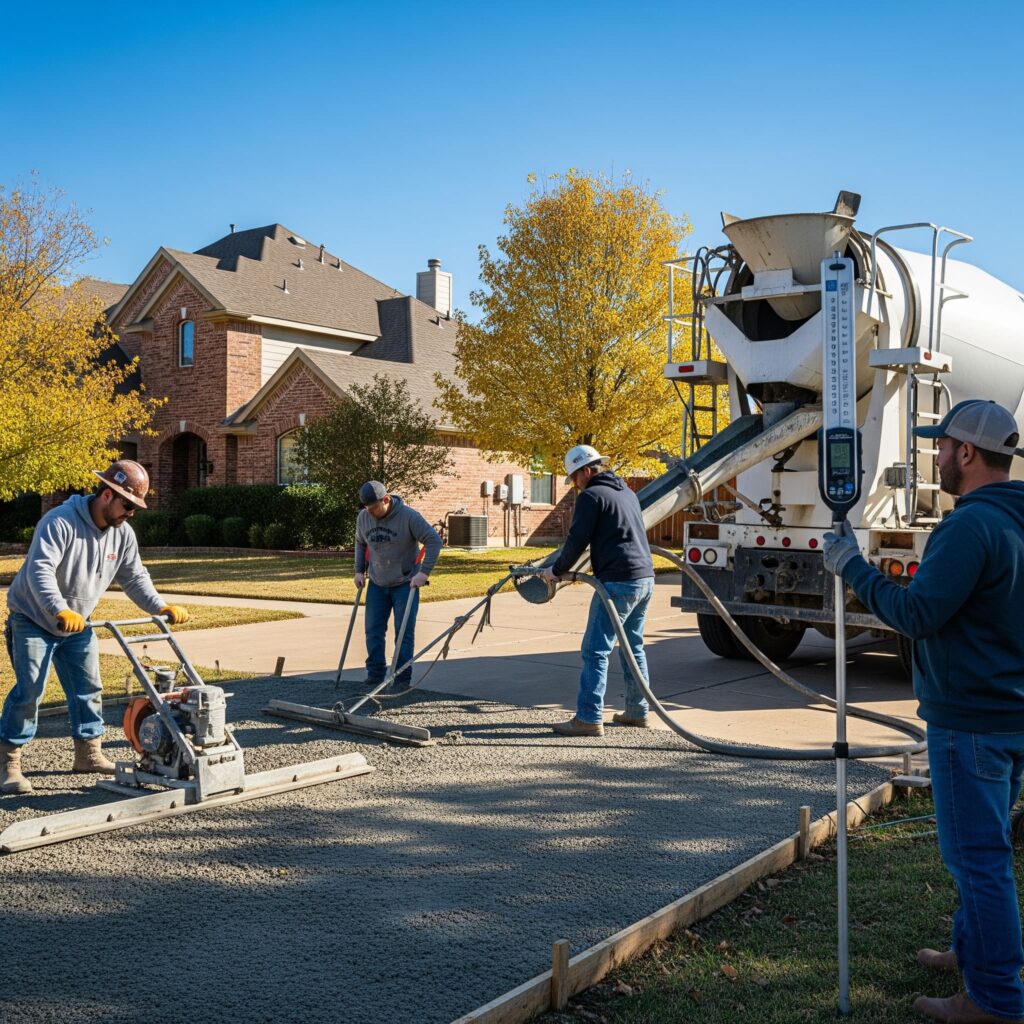
There are many effective ways to manage the heat during concrete placement in the summer. Misting the surface of the concrete during finishing operations continuously to replace the moisture lost due to evaporation will not add excess water to the mix. Temporary shading structures will protect the fresh concrete from the direct sunlight, while reflective curing compounds will reflect the radiant heat away from the concrete. Scheduling equipment to maintain a continuous flow of concrete is critical, and having backup mixers available will allow us to continue placing the concrete even if there is a delay due to the extreme heat. Equipping all trucks with temperature monitoring devices will ensure that each truck is delivering the correct temperature of concrete before discharging the load.
Considerations for Winter Placement of Concrete
Although the winters in Grand Prairie are much milder than those in northern climates, they do require some special precautions to be taken when placing concrete. Heated enclosures will protect the freshly placed concrete from cold air and will provide a warm environment for the concrete to begin curing. Insulated blankets will maintain the required temperature for the concrete to develop its design strength over the next few days after placement. Preparing the ground for concrete placement includes clearing any frost and warming up any frozen subgrade prior to placing the concrete. Accelerating admixtures will shorten the protection period required for the concrete to gain sufficient strength to withstand cold temperatures. Using Type III high early-strength cement will provide further assurance that the concrete will resist cold-weather-related damage. However, we avoid placing concrete when the ambient temperature drops below 20° F or when there is a prolonged period of freezing conditions.
Strategies for Protecting Concrete in Cold Weather
Protecting concrete in cold weather begins with proper planning and preparing materials. Heated concrete maintains a desirable placement temperature, and wind barriers will prevent rapid cooling of the exposed surfaces of the concrete. Form insulation systems will distribute heat evenly and will prevent thermal shock when the temperature of the concrete is gradually lowered.
Timing Considerations for Daily Placement of Concrete
The timing of the placement of concrete, even during the ideal seasons, greatly impacts the quality of the concrete. Typically, the best time to place concrete is in the morning when the temperature is lower, the humidity is higher, and the wind is lighter. The risk of placing concrete in the afternoon during hot weather is that it may exceed temperature limits and lose moisture rapidly. When considering the timing of the placement of concrete, it is also important to consider other aspects of the weather, such as wind speed, humidity, and barometric pressure. High winds will dry the surface of the concrete rapidly, regardless of the temperature, and low humidity will increase the evaporation rate of the concrete. By utilizing hourly forecasts to determine the best possible time to place concrete, we can optimize our chances of achieving successful placements.
Flexibility in Scheduling for Concrete Placement
Achieving success in the placement of concrete requires flexibility in the scheduling of the project. Having multiple backup dates for placing concrete will ensure that the project proceeds when the weather is suitable for placing the concrete instead of attempting to force placements under adverse weather conditions. This strategy has been successful in producing better results than a fixed scheduling approach that ignores environmental factors.
Advantages of Working with Experienced Professionals in Concrete Placement
Experienced professional concrete contractors have knowledge and experience in evaluating the weather and optimizing the timing of the placement of concrete. Our team evaluates multiple sources of weather information, maintains records of past weather trends in our area, and has knowledge of the subtle signs that indicate the best time to place concrete. This knowledge is particularly valuable during transition seasons when the weather changes quickly. Our quality control measures include continuously monitoring the temperature of the concrete, testing the slump of the concrete throughout the placement process, visually evaluating the cure rate of the concrete, and documenting all aspects of the project to ensure compliance with industry standards, regardless of environmental challenges. At Grand Prairie Concrete Pros, we have the knowledge and experience to time and place your concrete projects for the best results possible. Please contact us today to discuss your needs and learn about how we can assist you in maximizing the value of your concrete investments.
LATEST POSTS