
Menu
How to Prep for Concrete Resurfacing in Grand Prairie’s Climate
Concrete Resurfacing Grand Prairie
Concrete resurfacing in Grand Prairie is a complex process because of Texas’s climate, including extreme temperatures, fluctuating humidity levels, and seasonal weather patterns affecting both surface preparation and application of materials used in the resurfacing process. In Texas, it is common for the temperature to rise above 100 degrees Fahrenheit in the Summer months, and occasionally, the temperature will be below freezing in the Winter, resulting in different challenges for resurfacing projects. The importance of proper timing comes into play, since hot summers speed up the curing time of the resurfacing project, and increase the rate of evaporation, whereas high humidity can also create problems with adhesion and the finishing process of the project. Professional preparation techniques take into consideration Grand Prairie’s expansive clay soils, which continually shift under the existing concrete surface throughout the year. A successful resurfacing project is contingent upon a complete assessment of the surface, selecting the right type of product (material), and scheduling the resurfacing process around the current Grand Prairie weather conditions.
The Climate Challenges of Grand Prairie’s Temperature Extremes
Extreme temperature variations in Grand Prairie are the primary climate-related challenge to concrete resurfacing projects. As a result, surface temperatures often exceed 120 degrees Fahrenheit in full sun, far exceeding the recommended maximum application temperatures for nearly every type of resurfacing material. The extreme temperatures significantly increase the rate of setting of all types of resurfacing materials, which reduces the available time to apply and finish each coat, and ultimately limits the potential quality of the finished surface if it is not properly managed.
In addition, most manufacturers of concrete sealers and resurfacing materials specify 50 to 90 degrees Fahrenheit as the ideal temperature range for application of their product. When the temperature exceeds this range, the chemical reaction that occurs during the curing process accelerates, which leads to decreased adhesion to the existing surface, surface defects, and premature failure of the resurfaced surface.
Climate-Related Humidity Issues in North Texas
In addition to the extreme temperature variations in the climate of North Texas, there are also significant and varied humidity fluctuations that impact the success of resurfacing projects. High humidity creates an environment that does not allow for adequate evaporation of moisture from existing concrete, which causes problems with bonding between the old surface and new materials. Conversely, when humidity is extremely low and the temperature is very high, the surface will dry extremely quickly, which causes surface shrinkage and cracking.
The moisture level in many areas around Joe Pool Lake and throughout the residential areas of Grand Prairie fluctuates due to irrigation systems and natural drainage patterns. Therefore, professional preparation methods are used to manage these localized moisture variations by conducting surface tests and using various treatment options as needed.
Timing of Resurfacing Projects
Planning for Seasonal Conditions
Generally, Fall (October – November) represents the best time to resurface concrete in Grand Prairie. The fall season offers moderate temperatures, lower humidity levels, and fewer precipitation events than other seasons, which makes it an ideal time for surface preparation and material application.
While Spring (March – early May) has some potential as a secondary opportunity to resurface, the weather conditions are generally less predictable, and there may be a need for flexibility and contingency planning for sudden changes in temperature and precipitation.
Timing of Daily Work
Professional contractors will schedule the majority of the resurfacing work to take place during the cooler parts of the day. Typically, they will begin preparing the surface before daylight and complete the preparation work before the surface temperature exceeds 85 degrees Fahrenheit. Working during the early morning hours helps to minimize the effects of wind and evaporation, which supports the proper application of materials.
During the summer months, evening work may be required to delay surface temperature applications to below recommended levels. While evening work requires artificial lighting, it generally provides better working conditions for the detailed preparation and finishing work that is required for a successful project.
Evaluation and Preparation of Existing Surfaces
Assessing Structural Integrity and Contaminants
A thorough evaluation of the existing surface determines the presence of any structural problems, contamination, or underlying issues that may negatively affect the performance of the resurfacing process. A professional evaluation involves moisture testing, adhesion testing, and structural integrity testing to identify any issues that are not visible to untrained individuals.
Due to the expansive nature of the clay soils in Grand Prairie, there is always some degree of movement that can manifest as cracks, heaving, or differential movement across concrete surfaces. In order to prevent future failure and ensure the long-term performance of the resurfacing, these underlying issues must be corrected before the application of the resurfacing materials.
Removal of Dirt, Oil, Dust, and Foreign Contaminants
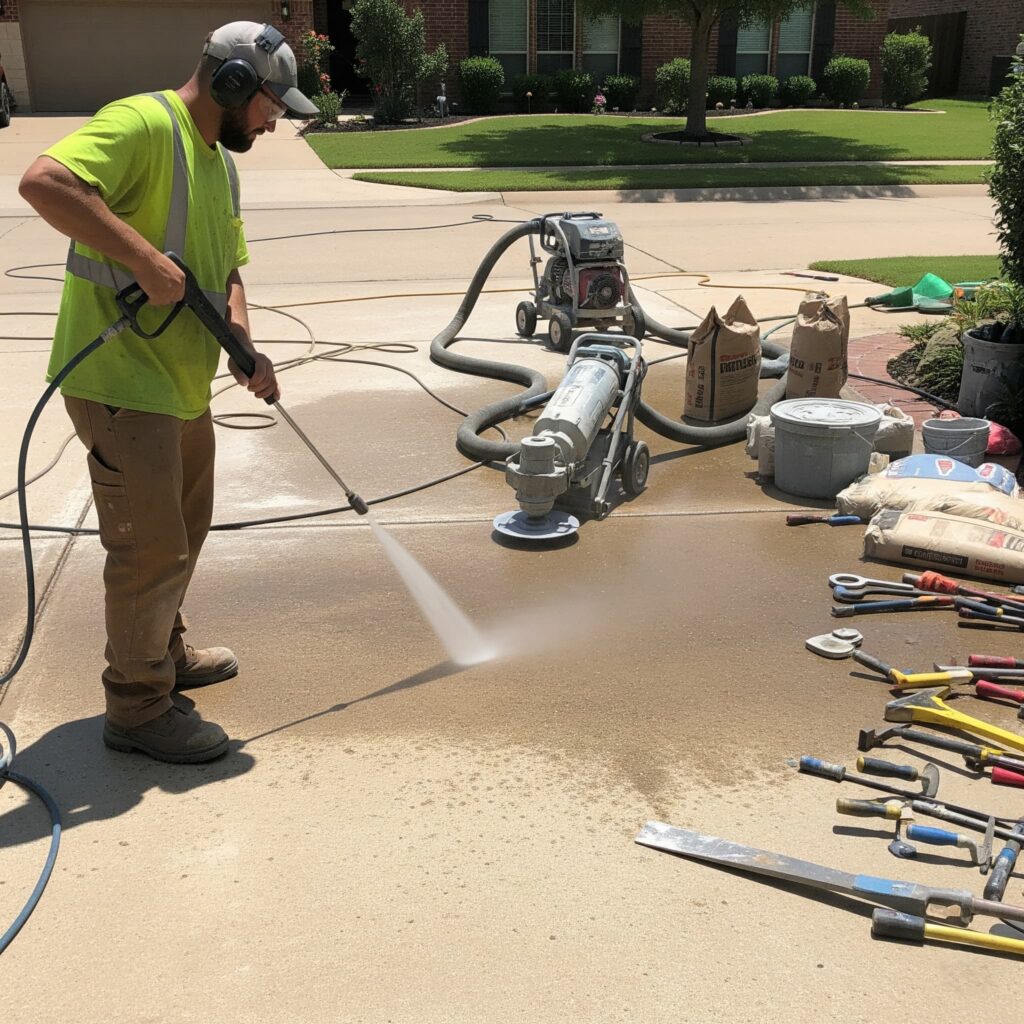
To prepare the surface for the resurfacing materials, all dirt, oil, dust, foreign contaminants, and laitance must be completely removed from the surface. Using professional-grade equipment, such as shot-blasting or aggressive mechanical scarification, creates the surface profile necessary to promote optimal adhesion between the existing surface and the resurfacing materials.
Common contaminants found on concrete driveways, such as oil stains, tire marks, and chemical contamination, require specialized treatments before resurfacing. These contaminants penetrate the concrete surface and continue to move upwards through the new resurfacing materials unless properly treated during the preparation phase.
Selection of Materials for Use in Texas Climates
Materials with Heat Resistance
Resurfacing materials specifically designed for use in Texas climates contain additives that slow down the curing process and provide improved workability in high temperatures. These specialized formulas provide enough working time to properly apply and finish the resurfacing coatings when the ambient air temperature is approaching 90 degrees Fahrenheit.
Additionally, premium resurfacing materials contain UV-stable pigments and stabilizers that resist color fade and surface deterioration due to prolonged exposure to sunlight. Properties located in proximity to EpicCentral and the Grand Prairie Stadium benefit from these enhanced formulas that preserve the appearance of the resurfaced surfaces despite being exposed to constant sunlight.
Systems with Moisture Tolerance
Advanced resurfacing systems have been developed that will accommodate the varying moisture levels commonly experienced in Grand Prairie’s climate without affecting the adhesion or performance of the resurfacing system. These materials contain moisture-mitigating primers that prevent bonding problems associated with residual moisture present in the existing concrete.
Topcoats with vapor permeability allow moisture vapor to pass through while maintaining the integrity of the surface, eliminating the possibility of blisters and delamination that may result from the application of non-breathable systems over concrete with residual moisture.
Preparation of Equipment and Tools for Texas Climatic Conditions
Equipment Designed to Operate in Extreme Heat
Professional surface preparation requires equipment designed to function properly in the extreme heat of the Texas climate, while maintaining worker safety and productivity. High-temperature-rated tools prevent failure and ensure consistent performance throughout extended working periods.
In addition to the extreme heat of the Texas climate, dust control systems are critical during dry periods when aggressive mechanical preparation produces airborne particles. Professional equipment includes built-in vacuum systems that collect debris while maintaining a clear line-of-sight and air quality for the workers and surrounding residents.
Shade Structures and Misting Systems
Portable shade structures and misting systems provide relief from surface temperature extremes during hot weather preparation. These systems enable safe working conditions for the crew while protecting them and the materials from excessive heat exposure.
Chilled Water Systems for Cleaning and Dust Control
Chilled water systems for cleaning and dust control reduce the surface temperature while providing effective preparation results. This equipment is particularly beneficial for large projects, where managing surface temperature affects the outcome of the entire installation.
Protocols for Managing Moisture
Testing for Surface Moisture
Professional moisture testing ensures that the existing concrete is at the proper moisture content to facilitate the successful adhesion of the resurfacing materials. There are several different testing methods, including calcium chloride tests and relative humidity testing, that measure the amount of moisture present in the substrate.
The surface temperature must be at least 5 degrees Fahrenheit above the dew point to prevent condensation during the application of the resurfacing materials. Professional contractors continuously monitor the surface temperature and dew point during the preparation and application phases to ensure optimal working conditions.
Methods for Controlled Drying
If the existing concrete is excessively moist, controlled drying methods can be employed to remove the excess moisture without causing rapid surface temperature changes that can lead to cracking or dimensional instability. Professional drying methods maintain the structural integrity of the existing concrete while meeting the desired moisture levels.
Forced-air circulation and dehumidification equipment can accelerate the moisture removal process in a controlled manner. This equipment is particularly useful in enclosed areas or in periods of high humidity when the normal drying rates are not sufficient to meet project deadlines.
Monitoring Weather and Developing Contingency Plans
Advanced Weather Forecasting
Professional contractors utilize advanced weather forecasting systems to provide current and future forecasts of temperature, humidity, wind speed, and precipitation probability. This information enables the contractor to plan and prepare for the project in advance and to make adjustments to the project plan as necessary.
Real-time monitoring of weather conditions during the working period ensures that the contractor is aware of any changes in the working conditions that may impact the project. Digital temperature and humidity meters provide instantaneous readings that guide the contractor in making decisions regarding the project.
Contingency Response Procedures
Professional contractors develop contingency response procedures that address any unexpected changes in the weather that could negatively impact the success of the project. These contingency plans include procedures to protect partially completed work, adjust the application rates of materials, and modify techniques based on changing conditions.
Emergency equipment, including heating systems, cooling fans, and weather protection materials, enables the contractor to complete the project successfully despite the onset of unforeseen weather conditions. All contractors maintain emergency equipment to ensure the timely completion of the project.
Verification of Surface Profile
Verification of the surface profile created during the preparation process ensures that the surface is prepared to accept the resurfacing materials and that the surface profile is suitable to ensure the mechanical bonding of the new resurfacing materials to the existing concrete. Professional testing methods verify that the preparation method achieved the correct surface roughness without creating excessive texture that may interfere with the application of the resurfacing materials.
Verification of Cleanliness
Professional contractors enforce strict cleanliness standards to ensure that all debris, dust, and contaminants from the preparation process are completely removed from the surface prior to the application of the resurfacing materials. Professional cleaning methods include final rinsing with clean water and utilizing compressed air to dry the surface before coating.
Inspection Protocols for Final Inspection
Before the completion of the project, professional contractors conduct final inspections to verify that the surface meets the manufacturer’s specifications and industry standards. This inspection protocol prevents bonding problems and ensures warranty coverage for completed installations.
Workplace Safety Issues in Extreme Temperatures
Protective Measures for Workers
Extreme temperatures pose numerous workplace safety issues that require comprehensive protective measures for workers, including regular hydration breaks, cooling stations, and scheduling modifications to prevent heat-related illnesses. Protective measures are standard operating procedures for professional contractors during the summer months.
Hot weather personal protective equipment provides the necessary safety while allowing workers to be mobile and dexterous. Personal protective equipment designed for hot weather includes breathable fabrics and cooling accessories that assist workers in remaining productive while protecting themselves from the heat.
Protective Measures for Equipment
Extreme temperatures require protective measures for equipment to prevent overheating and mechanical failure. Professional contractors perform routine maintenance schedules that account for the increased wear and tear on equipment during hot weather operation.
Protective measures for equipment, including proper ventilation and cooling systems, protect workers and equipment from excessive heat buildup. Proper ventilation and cooling systems are critical for enclosed working environments where natural airflow is limited.
Benefits of Hiring Professionals to Install Resurfacing Materials
Expertise in Local Climate
Professional contractors possess expertise and knowledge in the specific climatic conditions present in the Grand Prairie area and adapt their preparation techniques accordingly. Local experience eliminates common errors and ensures the best possible results under adverse climatic conditions.
Specialized equipment and materials designed for the Texas climate provide greater performance benefits than generic solutions. Professional contractors establish and maintain relationships with suppliers that understand the regional needs and provide the necessary products.
Warranty Coverage and Quality Assurance
Professional installations include warranties that protect against failures resulting from climate-related factors when proper preparation and application procedures are followed. Warranty coverage provides peace of mind for homeowners investing in concrete resurfacing projects.
At Grand Prairie Concrete Pros, we understand the unique challenges that Grand Prairie’s climate poses to successful concrete resurfacing projects. Our team’s years of experience dealing with the local weather patterns, soil conditions, and performance of resurfacing materials ensure that the preparation and installation process is successful, regardless of seasonal variations. From the initial surface assessment to the final quality inspection, our team utilizes tested methods to account for the extreme heat, humidity fluctuations, and movement of soils in Texas. Our comprehensive approach protects your investment while producing durable results that enhance the aesthetic appeal and functional ability of your concrete surfaces.
LATEST POSTS